About one in four of our removals in Central NJ uses crane support. It’s not the cheapest method — but for the right job, it’s the safest, fastest, and least invasive way to bring a big tree down. Here’s what crane work actually looks like and when it’s the right call.
What crane-supported removal is
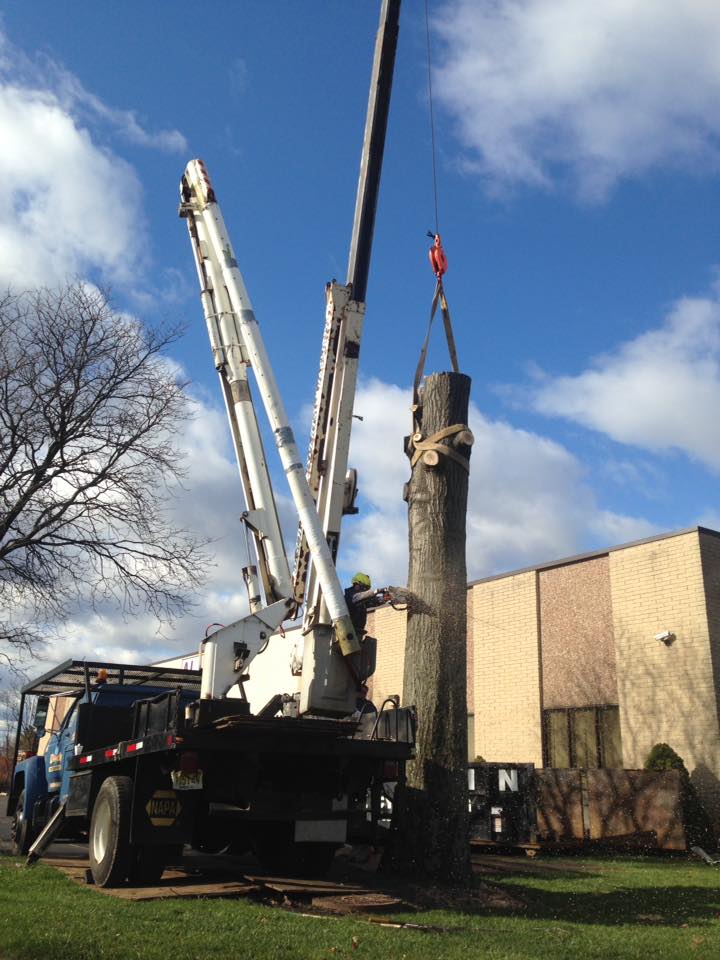
The crane (we typically use a 30–50 ton hydraulic boom crane parked in the driveway or street) holds tree sections under tension while a climber or bucket-truck cuts them free. Each section is then lifted clean over the house, garden, or other obstacles and lowered to a designated drop zone where ground crew bucks it up and feeds the chipper.
The alternative — conventional removal — involves rigging each section down on ropes through the canopy, with each piece swinging in a controlled arc to a landing point near the trunk. This works for many trees but is slower and harder when the canopy is large or when there’s no clear drop zone.
When we recommend a crane
- Trees over a structure with no clear drop zone. If we can’t safely lower limbs without swinging them over the roof, the crane lifts pieces clean over the house instead.
- Dead, brittle, or hollow trees. When the wood is unpredictable, a climber or rigger is in danger from limbs that snap unexpectedly. The crane keeps the climber out of the “drop zone” entirely.
- Trees in tight spaces. Backyards with limited drop zones — the crane can lift sections up and over a fence, a pool, a deck, or a neighbor’s shed.
- Very large trees. Sections of a 90+ ft hardwood are heavy enough that conventional rigging requires extensive setup. A crane handles them in 2–3 lifts.
- Hazard trees we don’t want to climb. Trees with major decay, ash trees killed by EAB, or trees that have already partially failed in a storm.
What it costs
Crane work adds roughly $800–$1,500 to a job that conventional methods could otherwise complete. So a job that would have been $1,500 with a climber + bucket truck becomes $2,300–$3,000 with crane support.
That sounds like a lot until you compare it to what a conventional approach to the same tree would have cost in time, climber risk, and rigging complexity. For trees over a structure, crane is often cheaper than the conventional alternative once you factor full labor.
What your day looks like
If you’ve scheduled crane removal, here’s the typical sequence:
Morning prep (30–60 min)
- Crane truck arrives, sets up outriggers, deploys boom
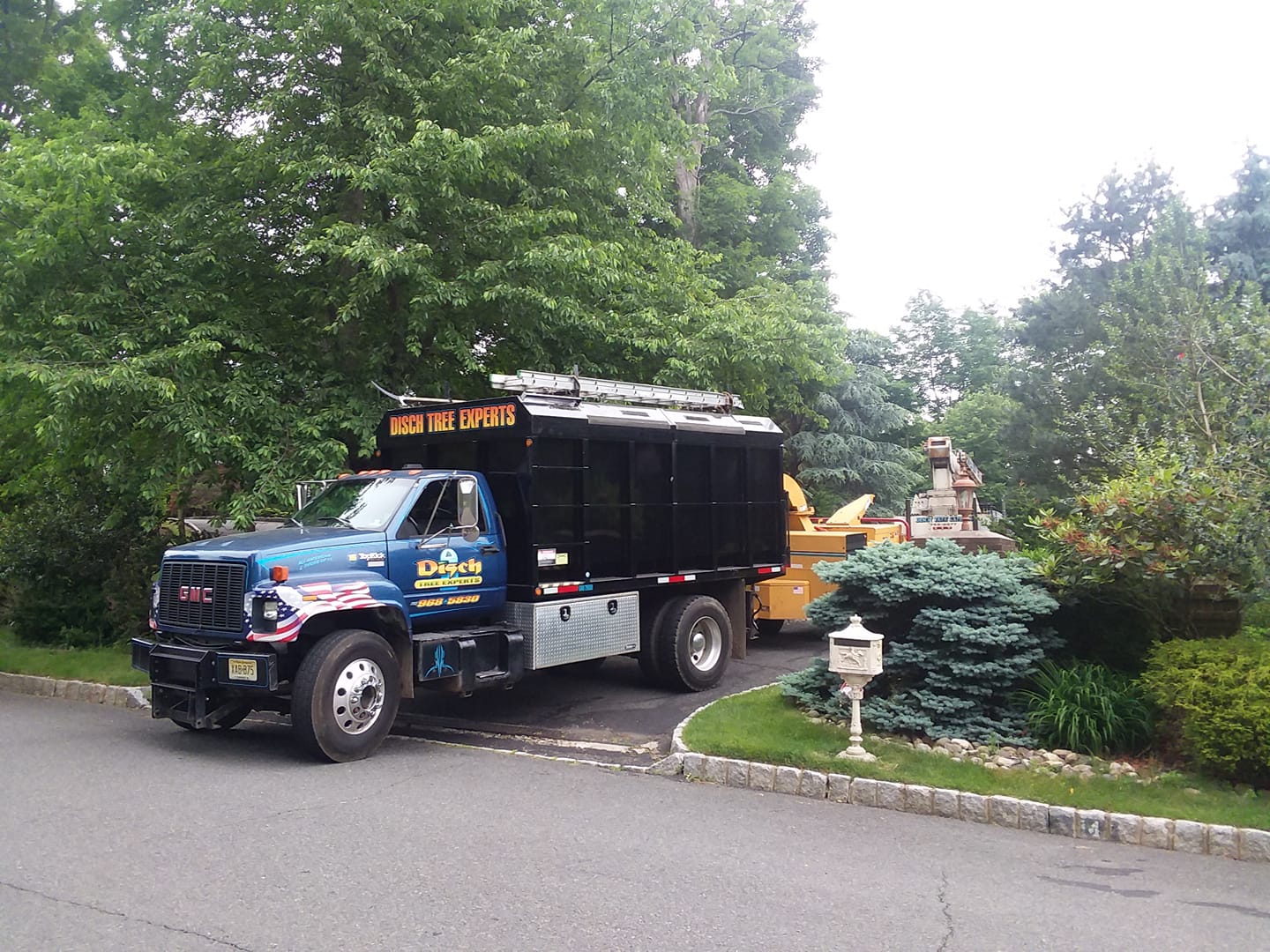
- Chip truck and bucket truck park in the drop zone
- Crew lays plywood mats on lawn if needed for crane outriggers
- Climbers attach the crane line to the first section
Cutting (2–6 hours typical)
- Top of tree comes off first — usually 4–6 sections, each lifted clean over the house
- Each section drops to the chip zone, ground crew chips brush + bucks logs
- Trunk goes last, often in 1–2 large pieces
- Process is loud during cutting, quiet between sections
Cleanup (45–90 min)
- All brush chipped and hauled
- Logs either hauled or stacked per your request
- Outriggers retracted, mats lifted
- Lawn raked and walked, sawdust blown off paths and patios
Total elapsed time: 4–8 hours for a typical residential crane job. Conventional removal of the same tree might take 1.5–2 days.
- Pets and kids stay inside during cutting
- Park your cars away from the work area
- Outriggers may temporarily occupy your driveway or street — we coordinate with you the day before
- If we’re working from the street, we may need to coordinate with the town for a temporary permit
- Power lines: if any wires need to be temporarily dropped, we coordinate with PSE&G or JCP&L in advance — this can add 1–5 days to scheduling
Why crane work is usually safer for the tree’s neighbors
The biggest risk in any tree removal is something going where it shouldn’t. Conventional rigging relies on careful rope management; one knot in the wrong place or one branch snapping unexpectedly can put a section through your skylight or your neighbor’s fence.
Crane support eliminates most of that risk because the section is fully under crane tension before the cut is made. Even if the wood snaps unexpectedly, the crane is already holding the piece. We can lower it slowly, place it precisely in the drop zone, and start the next section.
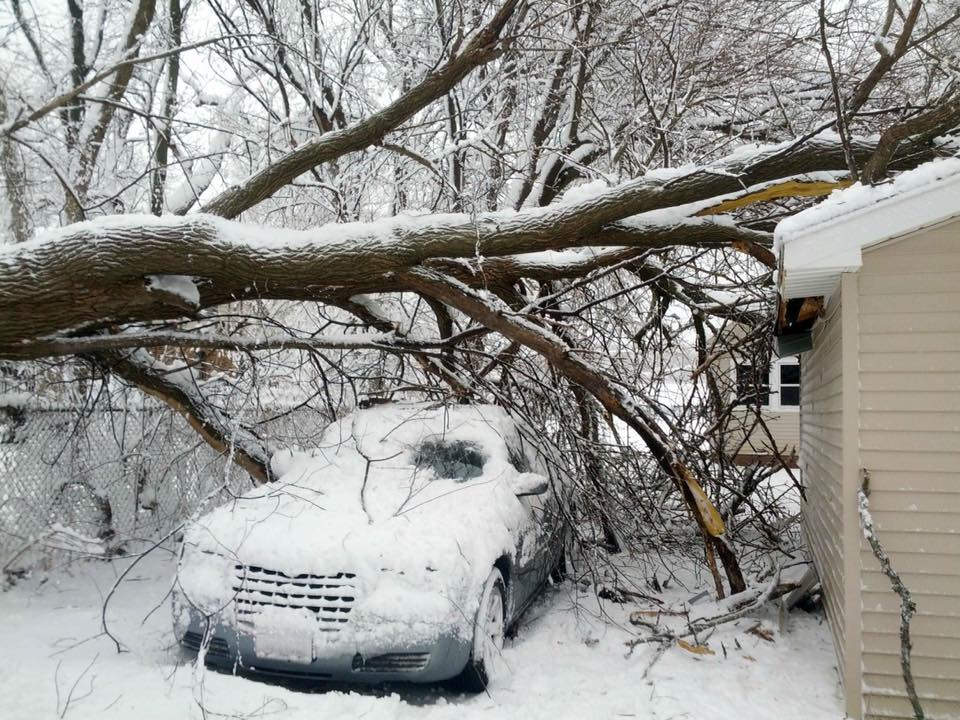
This is why crane work is the standard for tree-on-house emergencies. After major storms in NJ, almost every tree-on-structure call uses crane support, even when conventional methods could theoretically work.
Got a tree that needs crane work?
We own our crane (no rental delays) and we coordinate everything: utility drops, town permits, neighbor notifications. Free estimate, on-site walk-through, written quote.
The bottom line
Not every job needs a crane. For most open-yard tree removals, conventional methods are perfectly safe and substantially cheaper. But for the 25% of jobs where the access, structure proximity, or tree condition calls for crane support, it’s the right call — and often the cheaper one once you factor in time, risk, and the cost of anything that could go wrong without it.